
What’s the safest outdoor walker for gravel, grass, and uneven sidewalks?
A rollator works well indoors or on flat asphalt. But, on uneven ground like gravel, grass, or broken sidewalks, it can be shaky. This is true even with a good outdoor mobility aid.

The safest outdoor walker stays steady on bumpy ground. Not all rollators are made for outdoor use. The size of the wheels, the type of tires, and the frame design are key.
This guide focuses on safety outdoors. It means the walker should track smoothly, steer well, and stop safely. A good all-terrain walker should avoid getting stuck or tipping over. This is important for the elderly who want to move confidently.
FH ASSISTIVE TECH aims to help people live independently. They combine practical care with smart engineering. This reduces fall worries and makes outdoor walks more comfortable. If you want a premium mobility solution that's secure, the right design is critical.
Why gravel, grass, and uneven sidewalks demand a safer outdoor walker
Indoor floors are smooth and easy to walk on. But outdoors, every step can be different. You might find loose stone, soft grass, or cracked concrete.
These outdoor surprises can make you feel anxious about falling. This is true when your feet feel steady but the walker's wheels don't. A good walker for grass needs to handle these uneven spots well.

Small wheels can get stuck on rough paths. They might snag on rocks, catch on roots, or drop into cracks. When the walker gets stuck, pushing it harder can throw off your balance.
Walking on uneven ground can be tricky. A small dip can tilt the walker, and a bump can push it off course. If the walker slows down but you keep moving, you risk falling over.
Being safe outdoors means more than just wearing a helmet. A safe walker for uneven sidewalks should help you stay steady, in control, and on track. This is true even when the ground pulls you to one side.
- Traction that grips on loose gravel and damp grass
- Control you can manage on hills, with brakes that feel reliable
- Predictable tracking so the walker rolls forward instead of drifting sideways
Good habits are key to using your walker safely. Walk slowly, look ahead for obstacles, and use the brakes when stopping, on slopes. Practice on gravel and grass before longer walks. Be extra careful on wet grass, mud, or icy spots.
All-terrain rollator walker, Stable walking aid for elderly
An all-terrain rollator walker is made for more than just smooth floors. It's perfect for gravel paths, bumpy parks, and changing yards. It's a stable aid for elderly adults who want to enjoy the outdoors without worry.

What defines a true all-terrain rollator vs. a standard indoor rollator
A true all-terrain walker can handle bumps and small obstacles well. A standard indoor rollator works fine indoors but struggles with uneven ground.
- Pneumatic, air-filled tires that absorb bumps and reduce vibration in your hands and shoulders
- Larger wheels that roll over rocks, roots, and cracks instead of stopping short
- Steering stability on slopes so it tracks straighter and needs fewer quick corrections
Outdoor walker for gravel and best walker for grass: what “keeps rolling” really requires
An outdoor walker for gravel needs wheels that don't sink or skid. It should move smoothly over pebbles and ruts.
The best walker for grass also needs to handle soft ground. Larger tires help it climb over thick patches and small edges, making it easier to push.
Safe walker for uneven sidewalks: why stability on cross-slopes matters
A safe walker for uneven sidewalks should be steady on cross-slopes. Cross-slopes and cracks can cause it to drift sideways, even if the sidewalk looks flat.
With steadier tracking, you won't have to fight the walker to keep it straight. This big-wheel setup works well indoors too, gliding over thresholds and floor transitions that can trip up smaller wheels.
Wheel size and tire type: the biggest safety factor outdoors
On gravel, grass, and broken sidewalks, the right wheel setup is key. Bigger wheels can climb over small obstacles instead of getting stuck. This makes your rollator feel steadier, keeping your steps smooth and your hands relaxed.
A simple rule: pick your wheel size for the toughest surface you face, not the easiest. This is how outdoor rollator wheels help—by being steady when the ground isn't.
8-inch wheels: better for smooth indoor floors and flatter pavement, not rough ground
Many walkers have 8-inch wheels, which work well on smooth floors. But on rough ground, they can catch on obstacles. This leads to more effort and unexpected stops.
10-inch wheels: improved shock absorption and stability for grass, gravel, and dirt paths
10-inch wheels are a big step up for outdoor use. They help the rollator move smoothly over bumps and soft ground. If you're choosing between 12"/10" wheels, the 10-inch option is often a good choice for outdoor paths.
12-inch wheels: best control on rough terrain with fewer “stuck wheel” moments
For really rough paths, 12-inch wheels are the best choice. They roll over obstacles with less trouble and less wobble. This makes the ride smoother and more controlled.
Pneumatic vs. solid rubber wheels: comfort and grip vs. flat-proof convenience
The type of tire is just as important as the size. Pneumatic tires absorb bumps like a bike tire, making the ride softer. Adjusting the air pressure can improve comfort and grip.
Solid rubber wheels are firm and steady, and they never go flat. They're great for those who want consistent handling and easy maintenance. They're perfect for paths that mix smooth and rough surfaces.
Frame strength, weight limits, and fit: choosing a heavy-duty aluminum walker that feels secure
Outdoors, your walker faces more challenges than indoors. Gravel and cracked sidewalks can cause small jolts and quick tilts. A heavy-duty aluminum walker helps steady these impacts, making each step more predictable.
Don't just look at the design. An aluminum alloy frame offers strong support without being too bulky. It's perfect for daily outdoor use. Also, quality outdoor-grade materials are key because they withstand damp grass, dust, and sun.
Consider the weight rating and how it feels in real life. A max weight capacity of 300 lbs is great for many users, even when carrying a small bag. The net weight of 21.8 lbs makes it easy to lift and move around.
- Check the fit at the handles: elbows slightly bent, shoulders relaxed, wrists near the grips when standing tall.
- Avoid the “reach and pull” habit: it can shift your center of gravity on uneven ground.
- Test tracking: the frame should feel solid when one wheel hits a dip or soft patch.
A good walking aid for the elderly should support good posture. When the height is right, braking and steering are easier, even on bumpy paths. FH ASSISTIVE TECH aims to create walkers that are both secure and easy to use, making outdoor mobility dependable.
Fall prevention rollator features that matter on uneven terrain
Outdoor paths don’t stay flat for long. A fall prevention rollator should feel calm when you stop on a slight hill, pause on a gravel shoulder, or roll over cracked sidewalks. The right features help you move with less strain and more control.
Braking control for slopes and stop-and-rest stability (lockable brakes when parked)
On a gentle slope, a walker can creep forward before you notice. That’s why strong hand brakes matter, and why lockable brakes are so useful when you need to stand stil.
For safer stop-and-rest stability, squeeze the levers fully before you shift your weight, then set the parking mode when you plan to rest. This habit keeps the frame from rolling away on uneven ground.
- Stop early before the hill gets steep
- Plant both wheels on the most even spot you can find
- Lock, then sit if you’re using the seat
Steering stability and straight tracking to reduce sideways pulling on cross-slopes
Cross-slopes are the tricky spots where the sidewalk tilts toward the street. Many walkers drift downhill, so you end up wrestling the handles. Better steering stability makes the roll feel predictable instead of jumpy.
Look for straight tracking that stays true over seams, dips, and patchy pavement. When the rollator tracks straight, your shoulders can stay relaxed, and your steps stay more even.
Even with good control, take it slow and look ahead. Wet grass, mud, and icy patches can reduce traction and change how the wheels respond.
Seat and support comfort for outdoor breaks (rubber wheel rollator with seat essentials)
Outdoor errands often mean longer distances and fewer places to sit. A rubber wheel rollator with seat helps you rest without hunting for a bench, on park paths or rough sidewalks.
A steady seat, a supportive backrest, and a firm frame work together so you can pause without wobble. When comfort is built in, you’re less likely to push past fatigue, which can throw off balance on uneven terrain.
FH ASSISTIVE TECH Z57 all-terrain outdoor rollator walker: premium mobility solution for outdoor freedom
FH ASSISTIVE TECH aims to make outdoor movement steady and confident. The z57 all-terrain outdoor rollator walker is designed for this purpose. It helps reduce the risk of falls on uneven surfaces like gravel, grass, and broken pavement.
Built for uneven sidewalks stability with 12"/10" wheel size and rubber wheels
Outdoor paths can be tricky, causing walkers to veer off course. The z57's 12"/10" wheels handle cracks and small dips well. Its rubber wheels also grip rough surfaces, ensuring stability on uneven sidewalks.
For long-term use, the walker's brake and wheels can be replaced. This keeps the walker's handling consistent, which is important for safety on various surfaces.
Aluminum alloy frame with max weight capacity 300 lbs and net weight 21.8 lbs
A sturdy frame is key for steady walking, even when stopping and starting. The aluminum alloy frame supports up to 300 lbs and weighs only 21.8 lbs. This balance of strength and lightness helps maintain steady walking on different terrains.
Comfort details: high-density sponge backrest and waterproof oxford seat cushion
Short breaks can help you stay safe on long walks. The high-density sponge backrest and waterproof oxford seat cushion offer comfort. These features make it easier to take breaks without feeling rushed.
Adjustability for safer posture: adjustable height outdoor walker features and fit users 4'11"-6'3"
Fit is important for balance, which can be affected by uneven surfaces. The adjustable height of the walker helps maintain a safe posture. It fits users 4'11"-6'3" and supports an upright posture.
Beyond the path: FH ASSISTIVE TECH home safety ecosystem for independence
A steady outdoor rollator helps you move with less worry. But, real confidence also depends on what happens once you get home. FH ASSISTIVE TECH treats mobility like a full system, built around safer transitions in every room. This approach supports independence at home, where most slips happen during quick, everyday tasks.
Stairs and transfers can be the hardest moments, even for strong walkers. Options like a battery powered stair wheelchair, a disability stair climbing lift, and specialized elderly stair climbers can reduce strain and missed steps. For bed-to-chair moves, battery-powered transfer lifts and a motorized patient transfer device give controlled support when balance feels uncertain.
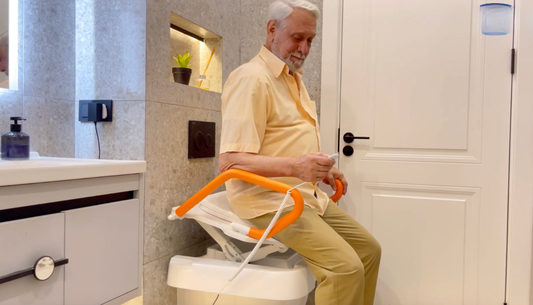
In the bathroom, a small wobble can turn into a big fall. An electric toilet seat lift chair helps users stand with less knee and hip stress. This makes toileting feel safer and more private. Pair it with a swivel bathtub transfer bench and other disabled bathroom safety equipment, so turning, sitting, and rising takes less effort.
Finishing the setup with the right handicap shower aid can cut down on rushing and reaching in wet spaces. The big takeaway is simple: when outdoor walking feels stable and the home supports safe stairs, transfers, toileting, and bathing, independence at home becomes more consistent and dignified.
FAQ
Can I use a rollator outdoors on gravel, grass, or uneven sidewalks?
Yes, but it depends on the design. A standard rollator works well indoors and on flat sidewalks. But, gravel, grass, and uneven concrete can be tough. A true all-terrain rollator walker is better for these challenges.
What does “safe outdoors” really mean for a walker?
“Safe outdoors” means the walker rolls smoothly and doesn't catch. It should steer well and stop safely. This is key for walking on loose or soft surfaces.
Why do gravel, grass, and uneven sidewalks feel so unstable with the wrong rollator?
Outdoor terrain is harder than indoor floors. Wheels face constant obstacles like rocks and cracks. This can upset balance and increase fall risk.
Are small wheels dangerous on rough ground?
Yes, they can be. Small wheels get stuck on rocks and cracks. This makes walking harder and increases the risk of falling.
What is an all-terrain rollator in plain language?
It's a walker for outdoor use, like gravel paths and uneven sidewalks. A true all-terrain model rolls smoothly over obstacles.
How can I tell a true all-terrain rollator from a slightly upgraded indoor rollator?
Look for larger wheels and outdoor tires. Also, check if the steering is stable on slopes. Many indoor rollators can't handle uneven ground well.
What wheel size is best for gravel and grass?
For outdoor stability, larger wheels are better. 8-inch wheels are good indoors. 10-inch wheels work for grass and gravel. 12-inch wheels are best for rough terrain.
Why do uneven sidewalks and cross-slopes feel tricky even when the surface is paved?
Sidewalks can tilt and cracks can cause steering drift. Many rollators pull sideways on slopes. A safe walker for uneven sidewalks tracks straight.
Pneumatic tires vs. solid rubber: which is safer for outdoor walking?
Pneumatic tires absorb shocks like bike tires. They're good for cobblestones and gravel. Solid rubber wheels are firmer but avoid flat risk. Some tires can be adjusted for comfort.
What’s the simplest rule for choosing an outdoor walker?
Choose a walker for the roughest surface you regularly use. If you walk on grass, gravel, or cracked sidewalks, pick an outdoor walker.
Does a large-wheel all-terrain rollator work indoors?
Often, yes. Large wheels roll smoothly over thresholds. But, small-wheel indoor rollators struggle on outdoor surfaces.
Why does frame strength matter for outdoor use?
Uneven terrain causes jolts and tilts. A strong frame keeps the walker stable and predictable. This boosts confidence and reduces tip-over risk.
What should I look for in a heavy-duty aluminum walker for outdoor stability?
Look for a rigid, corrosion-resistant frame and a realistic weight rating. A heavy-duty aluminum walker should feel secure on hills and uneven ground.
How does fit and adjustability affect safety on uneven terrain?
Proper fit is key for safety. If handles or armrests are wrong, control is harder. An adjustable height outdoor walker helps maintain balance and control.
Which fall-prevention rollator features matter most outdoors?
Focus on braking control and steering on slopes. Wheels should grip loose surfaces. These features help prevent falls on uneven ground.
How should I use the brakes outdoors for better safety?
Use brakes firmly when stopping, on slopes or uneven ground. Lockable brakes keep the walker steady during rests.
Why does a seat and backrest matter on outdoor walks?
Outdoor walks are longer and less frequent. A stable seat and backrest reduce fatigue and lower fall risk. A rubber wheel rollator with seat is practical for many routes.
What is the FH ASSISTIVE TECH mission, and how does it relate to outdoor mobility?
FH ASSISTIVE TECH aims to improve daily life with dignity. They focus on outdoor confidence and reducing fall anxiety on uneven surfaces.
What real-world habits improve safety even with an all-terrain rollator?
Walk slowly, look ahead for obstacles, and use brakes on hills. Practice on different surfaces before long walks. Be cautious in wet or icy conditions.
How does FH ASSISTIVE TECH support independence beyond outdoor walking?
They offer a range of mobility solutions, like transfer devices and stair solutions. They also provide bathroom and bathing aids for safety and independence.
Why connect outdoor mobility to transfers, stairs, toileting, and bathing?
Fall anxiety is not just for walking. It's also a concern during transitions like stairs and toileting. Stable outdoor walkers and home safety equipment support independence.